


Things to remember :
The cabbage soup diet helps you lose weight quickly, but the results are generally temporary and do not consist solely of fat loss.
Because it is very restrictive, it can lead to nutritional deficiencies and fatigue, which limits its effectiveness as a long-term weight-loss solution.
To maintain these results over the long term, it is essential to follow a balanced diet and engage in regular physical activity.
CONTENTS :
What is the cabbage soup diet?
Why Can Cabbage Soup Help You Lose Weight?
Cabbage Soup Recipe: Ingredients, Steps, Storage
Sample Cabbage Soup Diet Plan: Rules to Follow
Variations on the “cabbage soup” recipe, in a more balanced version
Effectiveness: What can we observe over 7 days… and beyond?
Every year — or almost every year — the cabbage soup diet is making headlines again. Especially before heading to the beach, just to tone up his summer body, or to “make up for” overeating during the holiday season. Why? Quite simply because this diet promises rapid weight loss — several kilos in just 7 days… But can the cabbage soup diet really work that fast? The answer is yes, though results vary from person to person. Is it a miracle diet? Absolutely not.
Like the overwhelming majority of restrictive diets, it provides only a temporary “quick fix.” If you’re aiming for lasting weight loss, there’s no secret to it: you need to adopt a healthy lifestyle every day. Furthermore, the cabbage soup diet There are a number of guidelines, contraindications, and risks you should be aware of before deciding whether or not to try it. From a typical 7-day plan to the results you can realistically expect from this diet, we’ll cover the essentials to help you make your decision.
A star of the 1980s, the cabbage soup diet owes much of its popularity to several celebrities who were looking to lose weight as quickly as possible. Its affordability also appealed to the masses. Rightly or wrongly? You’ll form your own opinion about the cabbage soup diet as you read this article. In any case, there’s no denying that it enjoys a certain degree of fame.
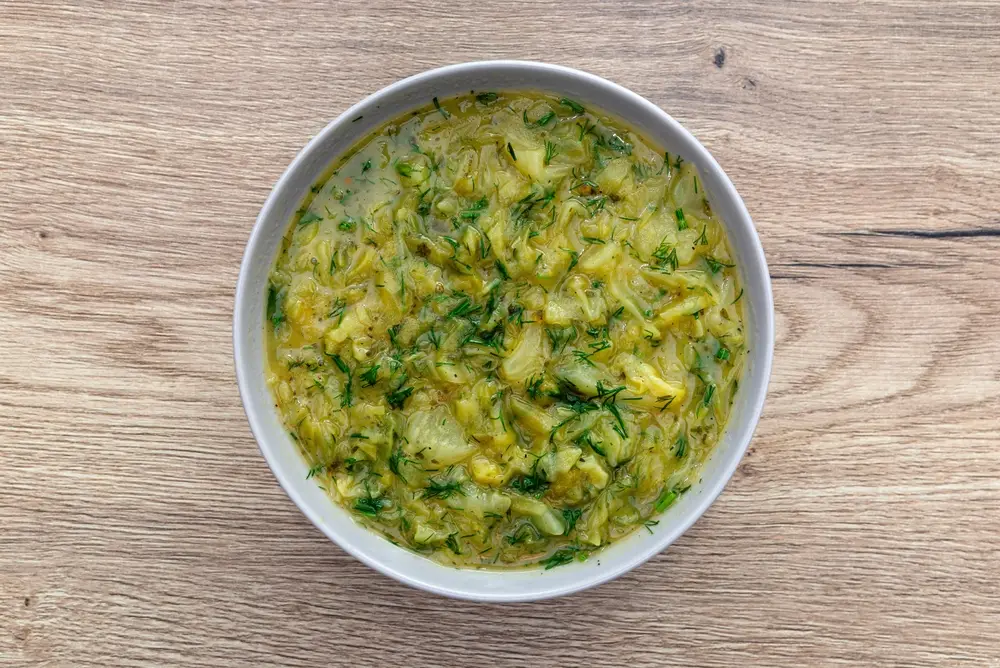
It essentially involves eating a bowl of cabbage soup at every meal (yes, even for breakfast, normally) for 7 days, along with various complementary foods depending on the day. Everything therefore revolves around this famous soup, which, strictly speaking, can indeed be considered a weight-loss dish.
Unless you have a specific medical contraindication (e.g., allergies, severe digestive problems), it’s clear that “homemade” cabbage soup is a healthy food. We’d like to emphasize the “homemade” aspect, since ready-made soups found on grocery store shelves are often too high in sugar and various additives. This is true whether they’re made with cabbage or any other vegetable, for that matter.
If you’re ready to cook it yourself to get the most out of cabbage soup, you should know that it:
It’s very low in calories. Which makes sense, really, for a dish made mostly of water and vegetables. Of course, the number of calories can vary depending on its exact ingredients (e.g., type of cabbage, additional vegetables), but generally, it’s less than 100 kcal per bowl of soup;
Helps you feel full quickly, thanks to its high water and fiber content.
These are two strong arguments that effectively classify cabbage soup as a weight-loss dish. It’s also worth noting that cabbage is a good source of vitamins B, C, and K, whichcan be very beneficial when consumed in moderation. However, it can also cause problems with certain medications when consumed in excess. We’ll discuss this in more detail in the section on the risks and contraindications of the cabbage soup diet.

To be honest, the recipe for the famous cabbage soup used as part of the diet varies depending on the source. But just for your reference, here’s a low-calorie, vitamin-rich, tasty, and very easy-to-make recipe that will easily enhance your meals any time of year — whether you’re on a diet or not!
Ingredients
1 head of curly green cabbage, preferably in winter (harvest season: November through March) for its high vitamin and antioxidant content. That said, you can also opt for 1 head of pointed cabbage — also known as “new cabbage”— during the spring and summer months. But these are just recommendations: in reality, all varieties of cabbage are nutritionally beneficial. So feel free to choose based on your personal taste: the key is to opt for in-season cabbage as much as possible to get the most vitamins;
2 large onions;
2 cloves of garlic;
3 carrots;
1 large tomato;
2 green bell peppers;
1 vegetable bouillon cube (optional);
spices to taste (salt, pepper, herbes de Provence, thyme… Depending on your preferences; this is mainly to make the soup more flavorful);
1.5 liters of water.
Total preparation time (including cooking) : about 40 minutes
Steps:
Wash your vegetables;
Peel the carrots and dice them;
Slice the onions and cabbage;
Peel and finely chop the garlic cloves;
Peel and dice your tomato;
Pour the water, vegetables, and bouillon cube (optional) into a pot;
Stir well, then bring to a boil;
Season (with salt, pepper, and other spices of your choice);
Reduce the heat and let it simmer over low heat for 30 to 40 minutes. When the vegetables are tender, it’s ready;
At this point, you can serve the soup as is, or blend it all in a blender if you prefer a smooth texture.
Shelf life : 3 to 4 days in the refrigerator.
Freezing Time : You can also freeze your cabbage soup for up to 3 months, if you prefer.
Random Tips : Take the time to really savor your soup. This will help you feel full more easily. Do you think your soup lacks a little zing? If so, feel free to add some turmeric—or even a pinch of chili pepper.
One of the most important rules is to follow the 7-day cabbage soup diet plan to the letter. Specifically:
Day 1: All-you-can-eat cabbage soup + fresh fruit with every meal (except bananas). As for drinks, stick to water, tea, or unsweetened coffee;
Day 2: All-you-can-eat cabbage soup + raw or steamed vegetables with every meal (e.g., spinach, green beans, broccoli). For drinks, stick to water or, if desired, unsweetened coffee or tea;
Day 3: All-you-can-eat cabbage soup + fresh fruit (still no bananas) + raw or steamed vegetables with every meal. As for drinks, it’s the same as before (water / tea / unsweetened coffee);
Day 4: All-you-can-eat cabbage soup + bananas (up to 3 per day) + 1 glass of skim milk during the day. This is a big change from the first few days of the diet, but that’s normal: this day prepares you to reintroduce protein. However, nothing changes in terms of drinks (water, tea, or coffee without sugar);
Day 5: All-you-can-eat cabbage soup + 150 grams of lean beef (e.g., tenderloin, flank steak) or skinless poultry (e.g., chicken, turkey) + fresh tomatoes. Same drink as always;
Day 6: All-you-can-eat cabbage soup + 150 grams of lean beef or skinless poultry + raw or steamed vegetables;
Day 7: All-you-can-eat cabbage soup + brown rice + raw or steamed vegetables. For drinks, you can have fruit juices with no added sugar.
It’s really very strict. For example, there’s absolutely no way you can eat fruit or chicken on a day when it’s not “on the schedule.” And drinking alcohol or soda during this time is out of the question. You can also forget about deli meats, cakes, cheese, and whole milk…
Among the other rules of the cabbage soup diet to follow, keep the following in mind as well:
that normally, you don’t add any fat, neither in the preparation of cabbage soup nor in that of other foods. This is why steaming is a good option for vegetables, for example;
that when we say “all-you-can-eat cabbage soup,” it really is all-you-can-eat. This means you can also eat them between meals to satisfy your hunger if needed;
thatthis diet should not be continued for more than 7 days. Why? Largely because it’s far too restrictive.
What are the biggest nutritional flaws of this diet?
Not enough protein — which is especially important for muscle health.
A glaring lack of fat, which is far from ideal when you consider that the body needs a minimum amount of fat to function properly. We’re thinking in particular of “good fats,” such as the well-known omega-3s, found in fatty fish, vegetable oils, meats, dairy products, and eggs. According to ANSES (the French Agency for Food, Environmental and Occupational Health & Safety), regular consumption of these fats helps reduce high blood pressure and the risk of cardiovascular disease.
Not to mention the very low carbohydrate content. Of course, the goal is to force the body to draw on its own reserves. But we certainly don’t want to end up with hypoglycemic episodes either.
Although it is fairly high in fiber, certain vitamins, and trace minerals, the cabbage soup diet can still lead to significant nutritional deficiencies. What’s more, it’s extremely low in calories: with fewer than 600 kcal per day, you won’t be able to keep it up for long—neither at work nor in your daily activities. These are two good reasons to NEVER follow this diet for more than 7 days.
For more information, be sure to check out the risks and contraindications of the cabbage soup diet, discussed a little further down in the article.
Even when you’re not “on a diet,” cabbage soup is definitely worth serving from time to time. That said, there’s no reason you can’t jazz it up a bit: this dish can still be very healthy while being more balanced… and even more delicious !
In practice, you can use the cabbage soup recipe as is, with just a few minor changes. For example, you can:
Sauté your vegetables in olive oil before adding them to the pot. It’s quick to do, and it helps enrich your dish with healthy fats;
Add legumes (e.g., lentils, white beans) to include plant-based protein in the recipe;
Or you can even add pre-cooked pieces of meat, such as beef or chicken (always skinless). This is a good way to increase your protein and iron intake.
See also : The Top 20 Foods to Eat to Lose Weight

After 7 days on this kind of diet, you should indeed see a weight loss on the scale. Technically, enthusiasts of this practice often mention an average of 5 kilos—or even more. But in reality, it depends on many factors (e.g., whether or not you’re retaining water, how resistant your body is to diets, etc.). So you may lose less, even if you strictly follow the 7-day program.
It also remains to be seen exactly what you “lose.” Don’t assume that it’s necessarily fat. After analyzing the effects of several restrictive diets—including the cabbage soup diet—ANSES concluded that “ Weight loss does not occur solely at the expense of fat reserves but quickly leads to weakness in the individual due to loss of muscle mass, regardless of the level of protein intake .” In other words, the weight loss shown on the scale may also be due to muscle loss. Which is rarely the intended effect…
That said, when following the cabbage soup diet, you may also lose water weight due to the diet’s strong “diuretic” effect.
So, the weight lost on the cabbage soup diet doesn’t necessarily mean you’re “burning fat reserves.” You’ll therefore need to look into other options to eliminate visceral fat or to get a flat stomach.
Also keep in mind that you’re likely to regain all the weight you’ve lost fairly quickly, just as with other restrictive diets. ANSES states in its report that “ 80% of participants regain weight after one year, and this rate increases over time “… With a little luck, you’ll ‘simply’ return to your previous weight. But you might also end up with an extra 2 to 3 kilos, unfortunately. That’s because the body tends to store more fat ‘just in case’ after having been starved…”
However, if you’re truly interested in this diet as a way to start losing weight, you can try a stabilization phase. This phase relies in particular on regular physical activity: we’ll discuss this in more detail below.
The main limitations of the cabbage soup diet are easy to identify:
It can help you lose weight quickly on the scale, but it doesn’t specifically target fat stores. You may also lose water and muscle mass;
It can be very tedious and frustrating to stick with, which makes it easier to “give in” along the way;
On its own, it cannot guarantee lasting weight loss. Quite the contrary: the yo-yo effect is far from a myth when it comes to the soup diet. To protect yourself from this as much as possible, you’ll inevitably need to go through a stabilization phase and maintain a healthy lifestyle on a daily basis to keep the weight off long-term.
That said, the biggest danger of the cabbage soup diet isn’t the yo-yo effect: ANSES warns of far more dangerous health problems.
According to the ANSES report “Health Risks Associated with Weight-Loss Practices,” very low-calorie diets share the following characteristics:
Pose cardiac risks. There are even occasional cases of sudden death;
Weakening bone mass, which in particular increases the risk of fractures and osteoporosis;
Contribute to liver inflammation (non-viral hepatitis);
May also promote the formation of gallstones;
May cause various digestive problems;
It can also have psychological consequences (e.g., depression), particularly following the failure of several weight-loss diets.
And that’s only part of the problem.
Who should not follow this type of diet without medical advice?
ANSES also emphasizes that restrictive diets, such as the cabbage soup diet, can be particularly dangerous for pregnant women (particularly due to the risk of fetal growth restriction), children and adolescents (in whom the resulting nutritional deficiencies can disrupt growth), and older adults (whose bone and muscle mass is already fragile enough as it is), and athletes engaged in intense physical activity (since an excessively low caloric intake can lead, in particular, to hormonal imbalances that are harmful to bone mass).
This also applies to you in the event of cancer in progress. Same story if you take a anticoagulant therapy : as part of a “normal” diet, the vitamin K found in cabbage – the vitamin that promotes blood clotting, as it happens – isn’t enough on its own to interfere with your treatment. But with a diet that has you eating cabbage from morning to night for 7 days, that could be a cause for concern.
Extreme fatigue, irritability, headaches, dizziness, a feeling of weakness, heart palpitations, shortness of breath during physical activity, paleness… These are all signs that your body is lacking protein, iron, or carbohydrates.
Not everyone who follows the cabbage soup diet will necessarily experience these symptoms—it also depends on the state of your “reserves” before you start the diet. But if they do appear, it’s not recommended to continue the diet; instead, discuss your symptoms with your doctor.
To maximize your chances of successfully completing the stabilization phase after the cabbage soup diet, you need to follow three rules.
Gradually return to more structured meals by reintroducing starchy foods (e.g., potatoes, whole-grain bread, brown rice), as well as sources of protein (e.g., eggs, fish, lean meats), and fats (e.g., olive oil, flaxseed oil, fatty fish such as salmon and sardines).
The goal is to get back on track with a healthy, balanced diet, free of any “bad habits” “dietary habits” that preceded your diet (e.g., a diet that’s too high in sugary or fried foods). By the way, did you know that paying special attention to your dinner is particularly helpful when you’re trying to lose weight? You can learn more in our article on low-calorie dinner.
Engage in regular physical activity. The energy expenditure it generates — along with maintaining your muscle mass — is truly essential for effectively stabilizing your weight, as ANSES regularly points out.
Don’t worry: no one is forcing you to become a climbing champion. The important thing is to choose an activity you enjoy and that’s suitable for your health: even walking can already do you a lot of good.
To read : Top 10 effective exercises to lose belly fat
Set reasonable goals for yourself, by regularly monitoring your weight. Under normal circumstances, losing 1 to 2 kg per month until you reach your goal is more than enough: it’s better to take it slow and steady to maintain a stable weight over the long term. That said, there are indeed cases where you need to lose weight more quickly (e.g., morbid obesity), but in such cases, weight loss usually takes place under medical supervision.
Additional solutions to consider
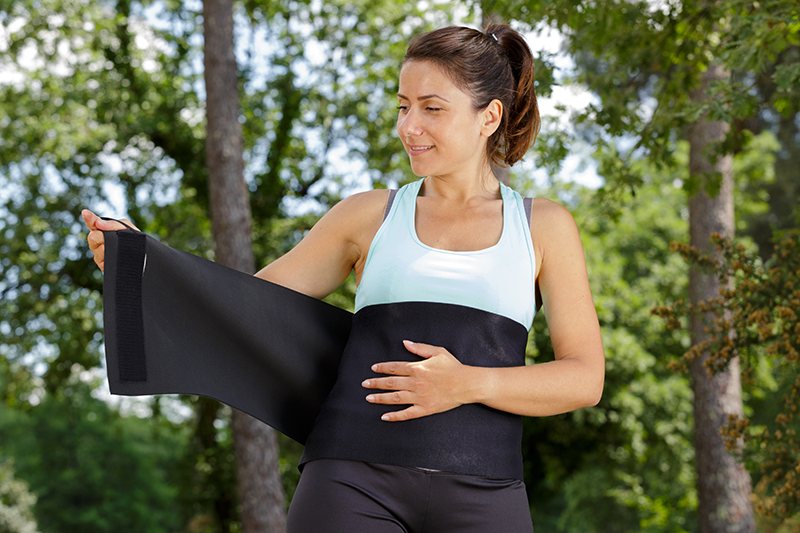
We can’t say it enough: sustainable weight loss depends first and foremost on a balanced diet combined with regular physical activity. This is truly essential for maintaining your figure and staying as healthy as possible. That said, when used as a supplement, certain aesthetic solutions can give you an extra boost. We’re thinking in particular of slimming belts. These belts use various types of technology, including BioStimology®, for example, as found in the BodySculptor belt. More specifically, this technology uses very low-frequency magnetic fields to reduce, among other things, waist circumference. You can learn more about this patented “made in France” technology in our section dedicated to BioStimology® if you’d like.
BodySculptor The belt for slimming made easy. It delivers concrete, measured and proven results in just a few weeks: a slimmer waist, a firmer stomach and toned skin.