If you would like to lose belly fat, the challenge is to succeed in reduce abdominal fat as much as possible. Which, to be honest, isn’t always easy! In fact, even when you start exercising again and watch what you eat, your body may still tend to draw on fat reserves in your thighs or buttocks, for example. What exactly is abdominal fat? Why is it so important to reduce it? How can you get rid of it more easily? We’ll answer all your questions while introducing our 5-point program—which combines exercise, nutrition, sleep, stress management, and tech support—to help you lose belly fat for good.
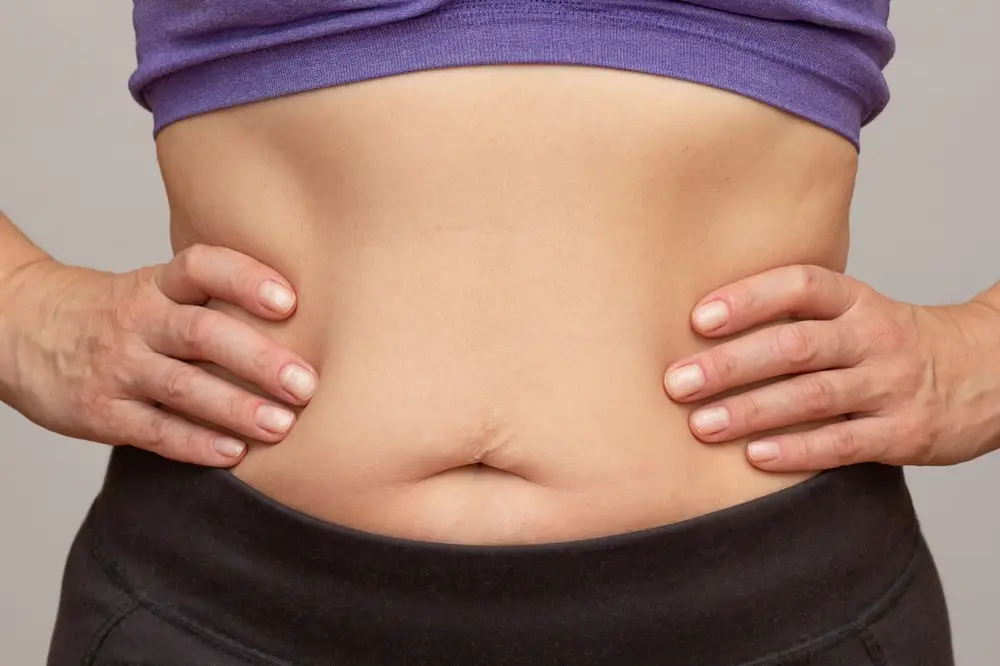
Abdominal fat refers to all the fat stored in the belly area. It therefore consists of two main types of fat: subcutaneous fat, located under the skin, and visceral fat, which surrounds abdominal organs such as the liver, pancreas, and intestines.
To put it simply, it’s often said that excess abdominal fat is dangerous to your health… But it’s more accurate to single out visceral fat specifically. As long as it remains in reasonable amounts, it doesn’t pose any particular concern. In excessive amounts, however, it can impair the functioning of various organs and metabolic processes. This can happen even with a normal BMI (Body Mass Index)—that is, between 18.5 and 24.9 kg/m² according to the WHO (World Health Organization).
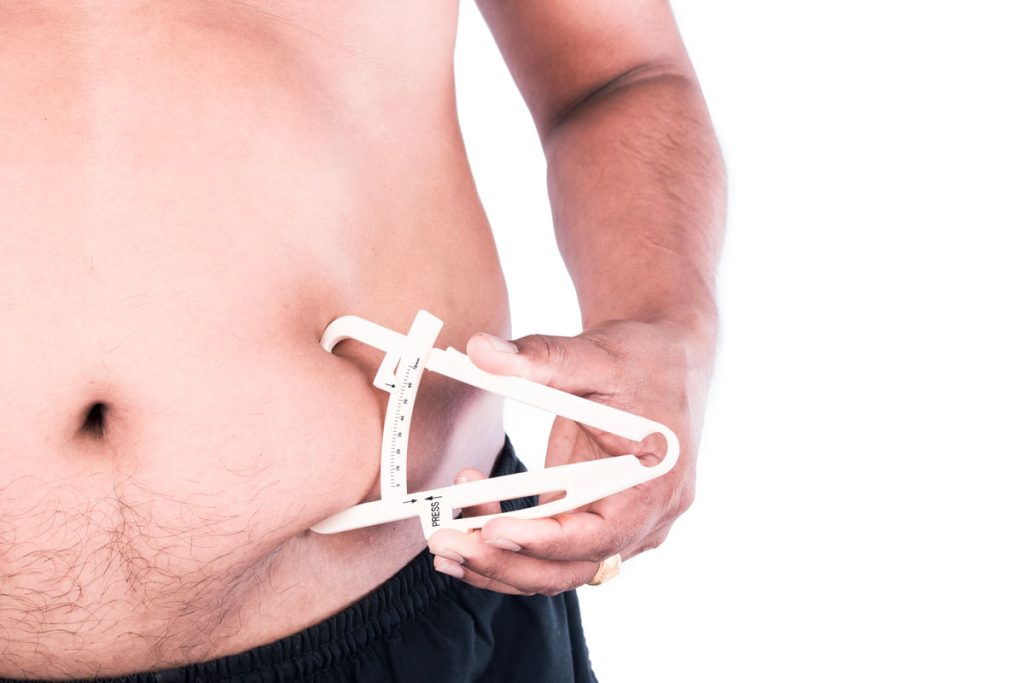
That is why it is common to also measure waist circumference to better assess risks, as Inserm notes in its report on obesity: “ When waist circumference exceeds 100 cm in men and 88 cm in women (excluding pregnancy), this is referred to as abdominal obesity.” It is at the stage of abdominal obesity that health risks are highest.
Specifically, they mainly include an increased risk of developing diabetes, cardiovascular disease, and various cancers, such as liver cancer.
To learn more, we invite you to read our article on eliminating visceral fat.
Several factors contribute to the accumulation of abdominal fat. In particular:
To lose belly fat more easily, it’s recommended that you eat a balanced diet—ideally one rich in filling, minimally processed foods! This will help you avoid snacking between meals and better control your sugar and fat intake…
More specifically, you should focus primarily on:
To learn more, check out our top 20 foods for weight loss. You’ll find fruits, vegetables, protein sources, and beverages that are especially helpful to include in your meals to get a flat stomach.
On the other hand, it’s best to limit the following foods and beverages as much as possible to lose belly fat:
To take it a step further, did you know that paying special attention to your dinner can also help you lose belly fat? You’ll find all the information you need in our article on evening meals for weight loss.

We can’t say it enough: regular physical activity is essential for staying healthy… and for losing weight more easily!
Why? First, because physical activity increases energy expenditure, which helps create a calorie deficit that prompts your body to draw on its fat reserves. On the other hand, because it helps build muscle mass, which in turn helps increase your resting metabolic rate. This will help you burn calories more easily, even while at rest!
It’s also good to know that certain exercises (e.g., cardio, HIIT, core exercises) are particularly recommended for losing belly fat. But that doesn’t mean they’re “miracle exercises”: in reality, no exercise specifically targets belly fat. Fat loss occurs throughout the body, depending largely on the energy deficit created.
On the other hand, activities that engage multiple muscle groups and significantly increase energy expenditure can contribute more to this overall fat loss. This ultimately makes it easier to lose belly fat!
Finally, keep in mind that consistency is absolutely essential for seeing results. As a general guideline, Manger Bouger recommends “at least 30 minutes of vigorous physical activity per day” to stay in shape… But what if you’re “allergic” to exercise? Don’t panic: walking regularly can already help you stay healthy and lose weight!
To learn more, check out our 10 exercises for losing belly fat and discover our tips for incorporating walking into a weight-loss program.
In and of itself, losing belly fat doesn’t necessarily mean “tightening the skin” as well. In fact, significant and/or very rapid weight loss can sometimes actually increase skin laxity in the abdominal area—this is particularly common when the skin has been stretched significantly over a long period of time. That said, it is difficult to make an accurate prognosis, given that:
In any case, there are non-invasive solutions available: to learn more, check out our 10 ways to tighten the skin on your stomach without surgery.
When you make an effort to lose belly fat, you can usually see the first results in 3 to 4 weeks. But for significantly more noticeable results, expect it to take 6 to 12 weeks. That said, this is just a realistic estimate that should apply to most of you.
In reality, keep in mind that losing belly fat can take more or less time depending on various factors, such as:
Not to mention each person’s ability to stick to their “little homemade plan” for losing belly fat. It’s hard not to give in to the temptation of ice cream or a plate of greasy fries every now and then if, for example, you set very strict dietary restrictions right from the start.
It’s the same story with exercise, by the way. Exercising to lose belly fat more easily: yes. Throwing yourself into it headlong to the point of getting injured or losing all motivation after a week: no. Of course, it’s normal to be eager to get rid of that “little belly” as quickly as possible. But setting the bar too high right from the start often ends up being counterproductive.
To help you lose weight in a sustainable way, we offer a step-by-step program designed to help you lose belly fat for the long term, based on a combination of diet, exercise, quality sleep, stress management, and technology-based support.
Goal: Gradually develop good habits without trying to change everything all at once
Diet: Gradually replace soda and fruit juice with water. If you usually drink them all day long, start by replacing every other glass.
Tip: Sparkling water or herbal teas can help reduce your frustration. Also cut back on alcohol, and try to structure your meals well by including a source of protein, vegetables, and a source of whole grains (e.g., legumes, whole-grain cereals, whole-grain bread).
At least for lunch and dinner: for breakfast, you can of course replace vegetables with fruit—unless you like an English-style breakfast.
And what about the calorie goal? That varies depending on too many factors, such as your age, gender, health status, and so on. But you can set it at the start of the program with your doctor’s help. Even though there are apps for this as well, your doctor is still the safest option if you have any underlying medical conditions.
Exercise: If you lead a very sedentary lifestyle, you should ease back into physical activity gradually. Start with a 10- to 15-minute walk each day. Try to maintain a fairly brisk pace without pushing yourself to the point of exhaustion.
A quick tip: You should be able to talk but not sing. If you can string together complete sentences while breathing a little harder, you’re in the right range for cardiorespiratory endurance. If possible, also add one short, weekly session of very gentle strength training—such as a stretching session or simple exercises done on a chair.
Goal: Reduce calorie intake without feeling hungry to prevent snacking
Goal: to continue making progress without placing an excessive burden on daily life.
Fitness: What if you added an exercise to strengthen your transverse abdominis to your walking routines and your two strength-training sessions? When it’s well-toned, it has a slimming effect that helps create a “flat stomach.” Among the gentlest exercises to strengthen it, we’re thinking primarily of the stomach vacuum, well known to bodybuilders.
The right frequency? 2 to 3 times a week. One caveat, however: it’s not recommended if you have blood pressure issues (high or low blood pressure), an aneurysm, or a lung condition… But if needed, there are other exercises you can do, such as the plank.
Goal: To burn even more abdominal fat by achieving a daily level of dynamic activity.
Goal: To turn this one-month program into a sustainable lifestyle—without an abrupt end to the diet or the yo-yo effect—to achieve lasting belly fat loss
You’ve made it! After four weeks dedicated to taking care of your body, mind, and diet to lose belly fat, it’s no longer really time for new guidelines… but rather for making your results last. To ensure this program isn’t just a fleeting effort, we invite you to take stock of your progress.
So take a few minutes to ask yourself this question: “Which eating and lifestyle habits do you find easiest to maintain on a daily basis right now?” Is it:
The key is to understand that the program doesn’t end here. There’s no “end of the program” that would mean a return to your old habits. The parts that seemed easy to you are your new foundation. Cherish them—they’re the key to a flat stomach in the long run. You can even increase the pace or intensity of your workouts if you’ve (re)discovered a love for exercise! Of course, be sure to exercise caution to avoid exhaustion or injury.
For habits that require too much effort, learn to be flexible. For example, if 30 minutes a day is too difficult to fit into your schedule, settle on a routine of 3 vigorous workouts per week. Similarly, you can aim to eat home-cooked meals “only” 80% of the time. If your lifestyle isn’t 100% perfect, it’s not the end of the world. But it still needs to be of good quality, both for your health and to keep your stomach flat.
Finally, to supplement the program, we invite you to watch this video:
Unless there are specific medical contraindications, it is recommended to combine several techniques to lose belly fat as quickly as possible. In summary, the key is to engage in regular physical activity, adopt a healthy, low-calorie diet, prioritize the quality of your sleep, and manage stress as needed; in addition, various aesthetic technologies can more precisely target abdominal fat. With such a program, the first results usually appear within 3 to 4 weeks. Expect more visible results in 6 to 12 weeks.
You don’t have to completely cut out a certain food to lose belly fat. However, it’s still best to limit sugary drinks, alcohol, very sweet foods, and highly processed store-bought products as much as possible, since they contribute to excessive calorie intake. A varied diet rich in protein, fiber, vegetables, and minimally processed foods is generally better suited for sustainable weight loss.
To reduce belly bloating, you must first distinguish between bloating and actual excess abdominal fat: these are two very different conditions, which therefore require different approaches. As a general guideline, to reduce bloating as quickly as possible, it’s often helpful to identify the foods causing digestive discomfort so you can eliminate them from your diet. It’s also generally recommended to stay well-hydrated and engage in regular physical activity. However, there are other possible explanations for a bloated stomach, such as the hormonal changes associated with menopause, which can cause both water retention in the abdomen and bloating by slowing down bowel movements. Hence the feeling of a distended stomach… If you have any doubts, be sure to consult your doctor! That said, if abdominal swelling is primarily due to excess fat, there is no miracle solution to “deflate” your stomach in just a few days. A balanced diet, regular physical activity, adequate sleep, effective stress management, and technological support remain the key strategies for losing belly fat over the course of several weeks.
No, abdominal exercises alone do not specifically burn belly fat. However, they can help improve the tone and appearance of your midsection, especially if you strengthen your transverse abdominis muscle: when it’s well-toned, it acts as a natural corset, contributing to the “flat stomach” effect. When done regularly, abdominal exercises can also promote overall fat loss as part of a balanced diet—at least if the calorie deficit is large enough to force the body to draw on its fat reserves.
With diet and exercise, it is not possible to precisely choose the area from which the body will lose fat. Fat loss tends to occur throughout the body, depending largely on each person’s hormonal profile and genetic makeup. However, certain aesthetic technologies (e.g., BioStimology®, Cryolipolysis) can more specifically target fat deposits in the abdominal area. But they must always be used as part of a healthy lifestyle… Which means you should use them in conjunction with a balanced diet and regular physical activity!
- 30%
avec le code promo :
CYBERMONDAY30


Offre valable uniquement le lundi 30 Novembre 2026 sur la boutique en ligne bodysculptor.fr dans la limite des stocks disponibles.
- 20%
avec le code promo :
BLACKDAYS20
valable jusqu’au 29 Novembre 2026 inclus, sur la boutique en ligne bodysculptor.fr dans la limite des stocks disponibles.